
Outdoor Seating That Supports Downtown Activity
Downtown spaces don’t operate on perfect weather or perfect timing. Food trucks roll in. Pedestrian traffic shifts throughout the day. Rain falls, then clears. Public seating has to support all of it.
Commercial outdoor picnic tables help transform sidewalks, plazas, and curbside areas into usable gathering spaces. When seating is durable, properly spaced, and built for daily exposure, it becomes part of the infrastructure that keeps urban areas active and functional.
Public Seating Drives Street-Level Engagement
In downtown districts, seating isn’t decorative. It directly supports:
• local food vendors
• lunchtime foot traffic
• community events
• temporary activations
• pedestrian-friendly design
A row of commercial picnic tables near a food truck or café encourages people to stay longer. That increases vendor sales, activates sidewalks, and supports local businesses.
Without seating, people grab food and leave. With seating, they gather.
That difference shapes how a city feels.
Weather-Resistant Design Matters in Urban Environments
Sidewalk seating is exposed to constant conditions:
• rain and standing water
• temperature shifts
• daily pedestrian contact
• cleaning and sanitation
• public wear and tear
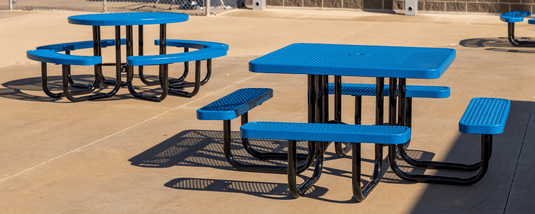
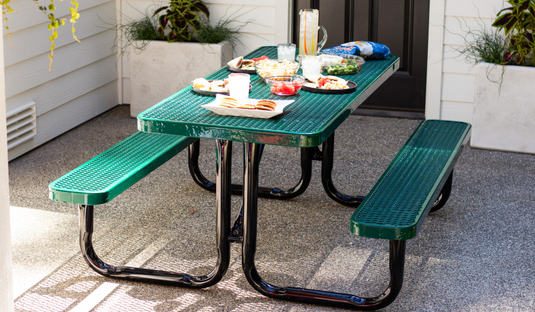
Commercial-grade picnic tables are designed to withstand these variables. Coated steel frames resist corrosion. Expanded metal surfaces dry quickly after rain. Stable construction prevents shifting or tipping in high-traffic areas.
Infrastructure in downtown spaces must handle exposure without becoming a maintenance burden.

Flexible Layouts Support Growing Districts
One of the advantages of commercial picnic tables in city settings is scalability.
Planners and business owners can:
• add additional tables during peak seasons
• create temporary event layouts
• support rotating vendors
• reconfigure seating zones
• maintain cohesive design across expansions
When products are consistent in design and finish, expansion feels intentional instead of patchwork.
As districts grow, seating should grow with them.
Infrastructure Influences Public Perception
Well-placed seating signals investment.
It communicates that a space is meant to be used. That it’s maintained. That people are welcome to pause, eat, talk, and gather.
Clean, durable tables contribute to:
• perceived safety
• organized pedestrian flow
• increased dwell time
• stronger vendor engagement
• more vibrant streetscapes
Outdoor furniture may seem like a small element, but in downtown environments, it plays a large role in how a space functions.
Key Considerations
In high-traffic urban environments, outdoor seating must balance durability, placement, and long-term value. Commercial picnic tables support food vendors, pedestrian flow, and year-round public use. When built for weather exposure and daily traffic, they become reliable infrastructure rather than short-term fixtures.
If you’re planning seating for a downtown plaza, food truck zone, business district, or pedestrian corridor, explore our commercial picnic tables designed for heavy use and urban environments.