
Designing for All: How High-Quality Coated ADA Picnic Tables Foster True Inclusivity in Public Spaces
An Invitation, Not Just an Installation

Look closely at this image. On the surface, it’s a photograph of a piece of site furniture. But if you look deeper, it’s an invitation. It’s a statement about community, visibility, and respect.
At Coated Outdoor Furniture, we understand that site furniture is more than just a place to sit; it is a fundamental component of public infrastructure. The way we design, manufacture, and place these items defines who is welcome in our shared spaces.
The image shows one of our premier ADA Picnic Tables—a green, coated expanded metal table with a wheelchair perfectly positioned in the designated accessible slot. This visual demonstrates true functionality, moving beyond simple compliance and into the realm of thoughtful, inclusive design.
In this comprehensive guide, we will analyze why this table design is a game-changer for accessible parks, the critical technical advantages of the coating seen in the image, and how you can use accessible site furnishings to create better, more cohesive communities.
The Problem: When Compliance is the Ceiling, Not the Floor
For decades, many commercial outdoor spaces have treated accessibility as a "checkbox" item. A standard picnic table might be modified with a shorter bench to allow a person using a mobility device to sit at the end. This is "compliance," but it often falls short of "inclusion."
Why Traditional Models Often Fail:
-
Isolation: When a wheelchair user is forced to sit at the end of a long, rectangular table, they are often on the periphery of the conversation. True connection happens face-to-face, around a central hub.
-
Obstruction: Modifications that require complex maneuvering can be frustrating or embarrassing for users.
-
Visual Exclusivity: A space with only one designated "accessible spot" can make a user feel like they are being accommodated as an afterthought, rather than welcomed as a default part of the community.
We need to move past "minimum requirements" and embrace Universal Design—the concept that spaces should be usable by everyone, to the greatest extent possible, without the need for adaptation. The table in the image is a perfect example of universal design in action.
Analyzing the Image: The Design DNA of Our ADA Picnic Tables
Let’s break down the table to understand the specific design elements that make it a leader in the accessible market.
1. The Geometry of Inclusion
The most striking feature of the table is its geometry. It is a square, expanded metal table that features integrated, attached benches on only three sides. The fourth side is deliberately left open.
The Functional Advantage: Look at how the black wheelchair shown in the photo is positioned. Notice the ample legroom. Notice how the user can pull their chair completely flush with the table surface. This isn't a table where a person is "sitting at the end." This is a table where the person is "sitting around the table." The wheelchair is positioned at the same angle, with the same perspective, as everyone else. This promotes eye contact and central conversation.
Furthermore, notice the central hole. This table can accommodate an outdoor umbrella, providing shade—an critical comfort element often overlooked for accessible seating.
2. The Choice of Material: Expanded Metal
The table surface and the benches are constructed from expanded metal. This is not just an aesthetic choice; it’s a practical one.
-
Drainage: Rain, dew, and spilled liquids (like sodas or sauces) drain instantly through the mesh, keeping the seating area drier and cleaner.
-
Weight Reduction: While robust, the open design reduces the overall weight of the assembly, making it easier to install without compromising strength.
-
Security: The open pattern makes it easier to spot abandoned items or debris.
3. The Power of Color
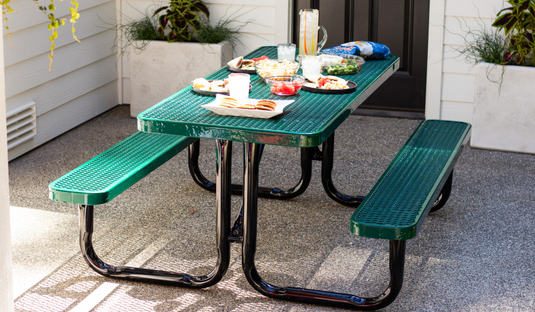
The green coating seen in the image is one of our most popular colors for coated outdoor furniture. Why? In a park setting (like the lush lawn and tree line visible in the background), the green color complements the natural surroundings. This table integrates visually into the landscape rather than creating a visual clash. This makes the entire inclusive installation feel intentional and harmonic, rather than sterile.
Why "Coated" Matters: The Technical Superiority of Thermoplastic and Powder Coating
If you look closely at the texture of the green table in the image, you see a smooth, consistent finish. That is not just paint. That is a sophisticated coating—either thermoplastic (for extreme durability) or heavy-duty powder coating (for visual perfection and resilience). When you invest in coated outdoor furniture, you are investing in longevity.
Here is a deep dive into why this coating is essential for a high-traffic, accessible environment:
Durability and Vandal Resistance
Parks and public spaces are harsh environments. Vandalism, intense UV exposure, and heavy use are constants.
-
Thermoplastic Coating: Often called a "functional" coating, thermoplastic is applied in a thick layer that cures into a flexible, smooth finish. It is exceptionally impact-resistant. Graffiti is famously easy to remove from thermoplastic. It is also UV-stabilized, preventing the green color seen in the photo from fading to a sickly light green over time.
-
Powder Coating: Known for creating a hard, visually perfect finish, modern commercial powder coating offers excellent corrosion resistance and chip resistance.
The "No More Hot Seats" Phenomenon
One of the most practical benefits of thermoplastic coating on expanded metal is its thermal properties. In intense summer sun, bare metal gets screamingly hot. It can cause burns. When children and individuals with varying sensitivities utilize the table, they must be comfortable. The thick thermoplastic layer has a much lower thermal conductivity. It stays touchable and comfortable even in direct sun, ensuring the space is always usable.
Low Maintenance = High Value
For facility managers (like the ones responsible for the immaculate path and lawn visible in the image), coated furniture is a relief. The non-porous surface is easy to hose down or wipe clean. It resists rust, mold, and mildew. A one-time investment in a high-quality coated table saves thousands of dollars in repainting, repair, and replacement costs over the life of the product.

Site-Wide Inclusivity: Beyond the Table
Let's look past the table itself to the context in which it sits. The table isn't just dropped into the grass. It is installed on a solid concrete pad, which is directly adjacent to a wide, clear concrete pathway.
This is a masterclass in proper accessible site installation.
The Problem of "The Island of Accessibility"
It is all too common to see a beautiful ADA table installed in a park, but the only way to get to it is by traversing 20 feet of uneven, soft grass. For a wheelchair user, a person with a walker, or someone pushing a stroller, that table is effectively invisible. It is an island of accessibility surrounded by an ocean of exclusion.
The Solution: The Accessible Route
The image shows exactly how to do it right. The wide, flush concrete pathway provides a clear and reliable route. The table’s concrete pad is large enough to allow a wheelchair to maneuver onto the accessible side without having to drop a wheel onto the grass.
When planning your layout, you must consider the complete journey:
-
Parking: Are there accessible parking spots?
-
The Pathway: Is there a continuously paved, wide, and smooth path leading to the furniture area?
-
The Maneuvering Space: Is the concrete pad around the table large enough? ADA standards usually require a clear space that allows a person using a mobility device to turn.
By integrating Coated Outdoor Furniture’s ADA Picnic Tables with proper landscaping and infrastructure, you create a space where everyone feels expected.
Summary: A Blueprint for Better Public Spaces
Investing in ADA Picnic Tables is not just a regulatory hurdle. It is a strategic move to improve the quality of life in your community.
By choosing our tables, you get:
-
Truly Inclusive Design: Face-to-face seating and central geometry that prioritizes dignity.
-
Unmatched Durability: The thermoplastic or powder-coated finish shown here is built to survive UV, rain, and vandalism.
-
Low Long-Term Cost: Reduced maintenance and repair costs mean a better return on your investment.
-
Community Pride: A visible symbol of a park system that cares about every citizen.
The table in the photo isn't just sitting in a park; it's waiting. It’s waiting for a family to share a meal, for friends to play a game, and for everyone to find a comfortable, dignified place at the heart of their community.
Contact Coated Outdoor Furniture Today
Ready to transform your park or facility into a beacon of inclusivity? Contact Coated Outdoor Furniture to learn more about our complete line of ADA Picnic Tables and coated outdoor furniture.